
A guide to choosing push-on edge trim seals correctly by panel thickness, metal carrier, compression direction and sealing requirements for your application.
Push-on edge trim seals are used to protect exposed sheet metal edges and, where needed, provide sealing on machinery, vehicles, cabins, control cabinets, caravans and various industrial applications. Depending on the application, these profiles can be used purely for edge protection or, combined with a soft sealing bulb, can also serve on doors and covers.
What Does a Push-On Edge Trim Seal Do?
The edges of cut or bent metal sheets must be protected for both user safety and product durability. Push-on edge trims cover the sheet metal edge and create a neater finish. Models with a suitable profile geometry also provide supplementary sealing against dust, water, air and vibration by creating compression between the cover, door or panel and the mating surface.
These products can be used on machine bodies, electrical cabinets, tractor and construction machinery cabins, automotive applications, caravans and various metal structures.
Why Use a Metal Carrier?
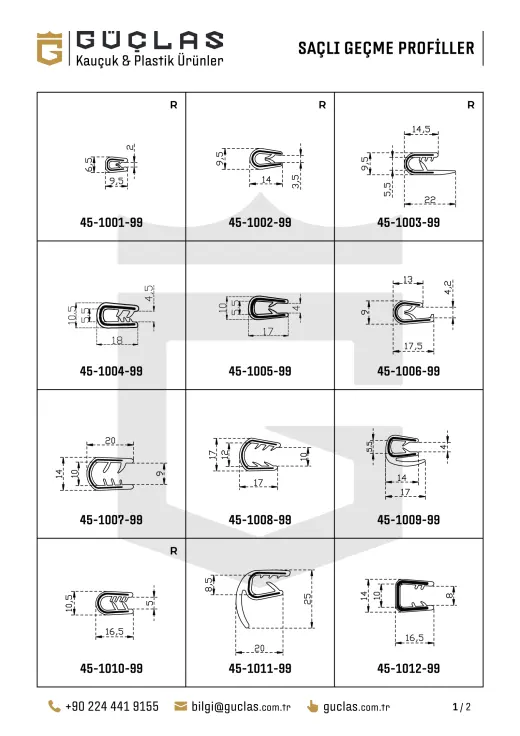
Some edge trim profiles have a metal carrier inside. This structure strengthens the profile's grip on the sheet metal and, in suitable applications, can reduce the need for additional fasteners. The match between the profile's internal geometry and the panel thickness is therefore very important.
You can explore the related Güçlas product group on the Metal-Reinforced Push-On Profiles page.
How to Choose the Right Edge Trim Seal?
1. Measure the Panel Thickness
The actual thickness of the sheet metal the profile will be pushed onto must be known. A channel that is too narrow can make installation difficult, while one that is too wide can reduce grip performance.
2. Is Sealing Required?
If only edge protection is needed, a U-shaped push-on profile may be sufficient. If the door or cover needs to press against the mating surface when closed, a bulb profile or a profile with a different geometry is preferred.
3. Determine the Compression Direction
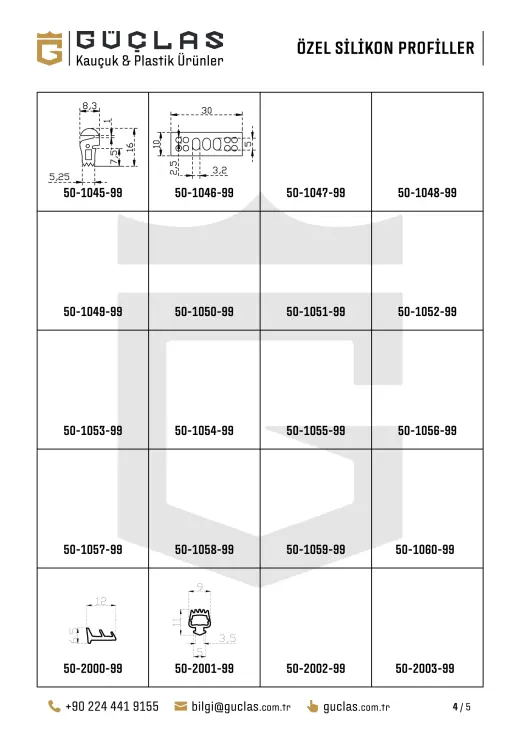
The soft sealing section may need to be positioned on top, on the side or at a different angle. You should therefore look not only at the overall dimensions of the seal but also at its cross-section geometry.
4. Assess the Environmental Conditions
Whether the product will operate indoors or outdoors, in sunlight, or be exposed to water or varying temperatures affects the choice of material.
Can a Seal Be Found from a Sample?
Even without a product code, a short sample or clear cross-section photo of the existing seal makes product selection easier. If dimensions such as overall height, width, grip channel and panel thickness are also shared, suitable alternatives can be evaluated more quickly.
Find the Right Profile with Güçlas
When selecting an edge trim seal for your machine, cabin or custom production, you can share a sample, cross-section photo and application dimensions. To have suitable profile options from the Güçlas product groups evaluated, reach us via our contact page.