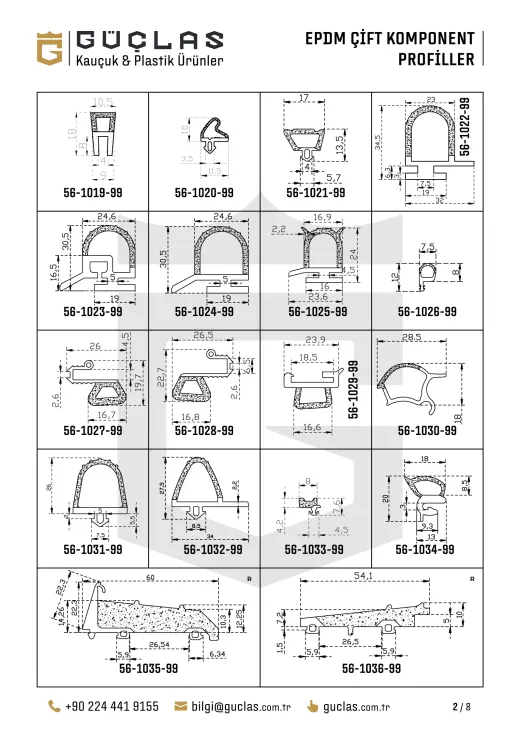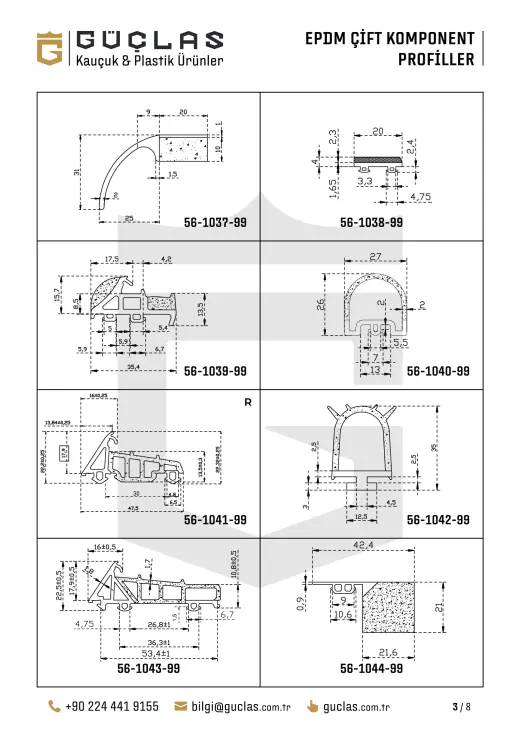

Only have an old seal sample? Learn how section measurement, material assessment, equivalent selection and custom production work for seals and profiles.
The part number of a seal used on a machine, vehicle, cabin or special equipment may be unknown. Especially on older systems without a technical drawing or part number, matching seals and profiles from a sample becomes essential.
What Information Is Taken from the Sample?
From an undeformed piece of profile, the overall height, width, channel size, lip or bulb dimensions and contact surfaces can be examined. It is also essential to know which sheet metal, glass or channel the product works on.
Is a Photo Alone Enough?
A clear cross-section photo is useful for an initial assessment, but without dimensional data an accurate match is difficult. Sharing key dimensions measured with a caliper and an image of the application area together with the photo gives a more reliable result.
Can the Closest Product to the Existing Profile Be Found?
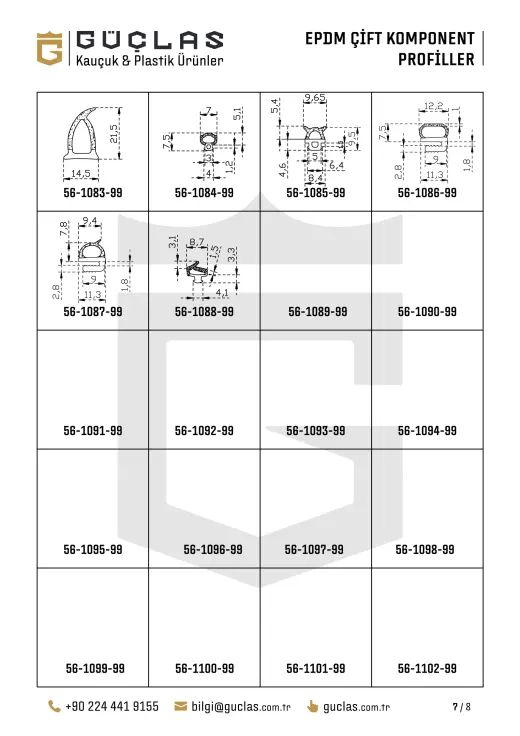
In most cases, geometrically and functionally suitable alternatives are first sought within the existing product groups. If there is no exact match, the need for a custom section can be evaluated based on the quantity and technical requirements of the application.
For measuring details, see our guide How to Measure a Seal.
How Is the Material Determined?
The appearance of the sample alone may not definitively identify the material. Whether the product operates outdoors, in contact with oil, under heat or in contact with water should be taken into account in the selection.
Can I Send a Sample to Güçlas?
By sharing your profile sample, cross-section photo and dimensions with Güçlas, you can have suitable alternatives from the existing product options evaluated.